

Nov05
12:00 pm
Nov05
1:00 pm
Parsons Laboratory Seminar Series: Electrochemical Ammonia Synthesis and Sensing in Environmental Waters
Please join us for the Ralph M. Parsons Laboratory Seminar Series with speaker Will Tarpeh, of Stanford University, who will discuss "Electrochemical Ammonia Synthesis and Sensing in Environmental Waters" Faculty host: Prof. Plata
The seminar is in-person at 15 Vassar Street, 48-316 and requires registration.
For more information or how to attend this seminar virtually, please contact lumidi@mit.edu
Oct29
12:00 pm
Oct29
1:00 pm
Parsons Laboratory Seminar Series: A drier future for Europe and the Mediterranean
Please join us for the Ralph M. Parsons Laboratory Seminar Series with speaker Alexandre Tuel, of University of Bern, who will discuss "A drier future for Europe and the Mediterranean" Faculty host: Prof. Eltahir
The seminar is in-person at 15 Vassar Street, 48-316 and requires registration.
For more information or how to attend this seminar virtually, please contact lumidi@mit.edu
Oct27
1:00 pm
Oct27
2:00 pm
CEE Graduate Admissions Webinar
This webinar will provide an overview of all the graduate degree paths in CEE at MIT and the process for applying.
Led by Civil and Environmental Engineering Admissions Staff
Oct20
4:00 pm
Oct20
5:00 pm
Graduate Catalyst Event
This interactive webinar provides participants with useful information for applying to and thriving in graduate school. Sessions are open to all students exploring the option of graduate studies in CEE at MIT
Led by Current CEE students and Graduate Officer, Professor Colette HealdRegistration closed
Oct20
2:00 pm
Oct20
3:00 pm
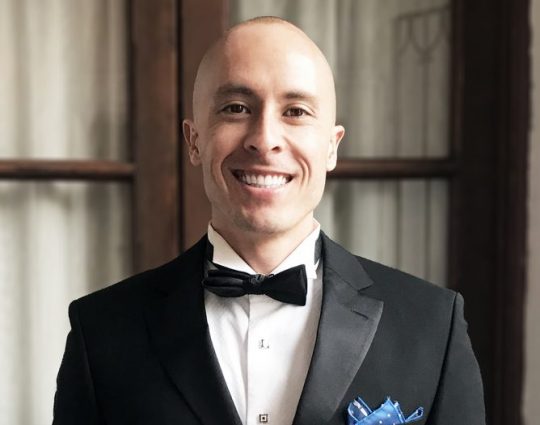
Climate Talks | Josh Fisher: The Fate of the Terrestrial Biosphere
A talk show series about Climate Science with some of the most influential scientists in the field. This will be a dynamic conversation about climate change, not a lecture, where you will learn about the latest research on carbon and climate science. These talks are accessible to everyone, whatever your background is, you are welcome.
The series is kicking off with Dr. Joshua B. Fisher. Dr. Joshua B. Fisher is a Climate Scientist focusing on terrestrial ecosystems, water, carbon, and nutrient cycling using a combination of supercomputer models, remote sensing, and field campaigns from the Amazon to the Arctic. He completed his undergraduate and graduate degrees from UC Berkeley and his postdoctoral work from the University of Oxford.
Dr. Fisher was at NASA’s Jet Propulsion Laboratory (JPL) for over a decade, and was the Science Lead for the ECOSTRESS mission, focused on plant water use/stress from the International Space Station. He is currently Presidential Fellow of Ecosystem Science on the faculty at Chapman University; and is also now the Science Lead for Hydrosat, which is launching a constellation of thermal satellite missions.
Dr. Fisher has been named one of the world’s “most influential” researchers, in the top 0.1% of scientists with papers in the top 1% by citations for the past 3 years in a row.
Faculty Host: César Terrer/The Terrer Lab
Oct15
12:00 pm
Oct15
1:00 pm
Parsons Laboratory Seminar Series: Molecular-level reactivity of dissolved organic matter in natural and engineered systems
Please join us for the Ralph M. Parsons Laboratory Seminar Series with speaker Christy Remucal, of University of Wisconsin, who will discuss "Molecular-level reactivity of dissolved organic matter in natural and engineered systems" Faculty host: Prof. Plata
The seminar is in-person at 15 Vassar Street, 48-316 and requires registration.
For more information or how to attend this seminar virtually, please contact lumidi@mit.edu
Oct12
12:00 pm
Oct12
1:00 pm
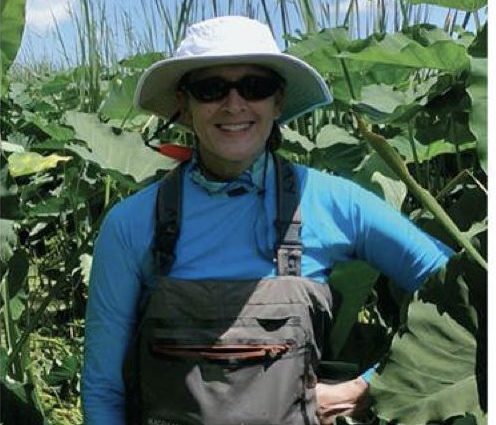
CEE Faculty Seminar Seminar Series: Vegetation Hydrodynamics for Restoration, Climate Mitigation and Adaption
Please join us for the CEE Faculty Seminar Series with speaker Prof. Heidi Nepf, who will discuss "Vegetation Hydrodynamics for Restoration, Climate Mitigation and Adaption" Faculty host: Prof. Carstensen
The seminar will be held in-person at 1-131. For more information or how to attend this seminar virtually, please contact Jeanette at jmmarch@mit.edu
Oct08
12:00 pm
Oct08
1:00 pm
Parsons Laboratory Seminar Series: Ecology in an Autocorrelated World
Please join us for the Ralph M. Parsons Laboratory Seminar Series with speaker Sebastian Schreiber of University of California, Davis, who will discuss "Ecology in an autocorrelated world." Faculty host: Prof. Saavedra
The seminar is in-person at 15 Vassar Street, 48-316 and requires registration.
For more information or how to attend this seminar virtually, please contact lumidi@mit.edu
Sep24
12:00 pm
Sep24
1:00 pm
Parsons Laboratory Seminar Series: Wild Microbial Ecology
Please join us for the Ralph M. Parsons Laboratory Seminar Series with speaker Bruce Hungate of Northern Arizona University who will discuss “Wild Microbial Ecology”. Faculty host: Cesar Terrer
The seminar is in-person at 15 Vassar Street, 48-316 and requires registration.
For more information or how to attend this seminar virtually, please contact lumidi@mit.edu
Sep22
2:00 pm
Sep22
3:00 pm
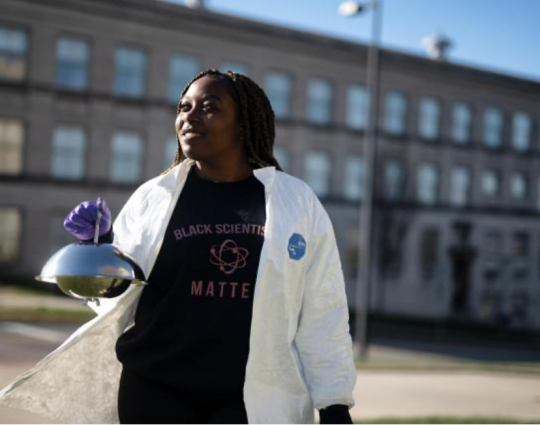
Future Leaders in CEE: Emission Characterization and Criteria for Remediation of Polychlorinated Biphenyls in Lower-Income Public Schools
Join the MIT Civil and Environmental Department for its Future Leaders in CEE: Supporting research, career development, diversity, equity and inclusion seminar series that brings together speakers from diverse backgrounds who are considered future leaders in STEM and civil and environmental engineering to share their journey to achieve success. This month's speaker is PhD candidate in Civil and Environmental Engineering at the University of Iowa, Moala Keshei Bannavti Seminar topic: Emission Characterization and Criteria for Remediation of Polychlorinated Biphenyls in Lower-Income Public Schools In a school, airborne polychlorinated biphenyl (PCBs) exposure may come from multiple sources. We hypothesized that there are both Aroclor (historic) and non-Aroclor (modern) sources within a single school and that PCB concentration and congener profiles differ among rooms within a single building. To evaluate this hypothesis and to identify potential localized sources, we measured airborne PCBs in nine schoolrooms. School room concentrations and congener profiles statistically varied from one room to another. Rooms in the oldest wing of the building, constructed between 1920 and 1970, had the highest PCB concentrations. The congener distributions indicate historic use of Aroclor 1254 as well as modern sources of non-Aroclor congeners associated with paint pigments and surface coatings. Our findings suggest this noninvasive source identification method presents an opportunity for targeted source testing for more cost-effective prioritization of materials remediation in schools, making PCB remediation more accessible for disadvantaged school districts. About the Presenter: Moala is a PhD candidate in Civil and Environmental Engineering at the University of Iowa, studying room-to-room variation and remediation of polychlorinated biphenyls in minority-predominant, low-income public schools. As a first generation Cameroonian immigrant raised in urban NJ, Moala identifies first-hand with the issues in minority predominant low-income school districts and is determined to bridge the gap in environmental justice experienced by those of low socioeconomic status. Please email Stephanie at smartino@mit.edu if you would like to attend.