
MIT Assistant Professor Michael Howland receives NSF CAREER Award to advance the fluid dynamics of energy harvesting
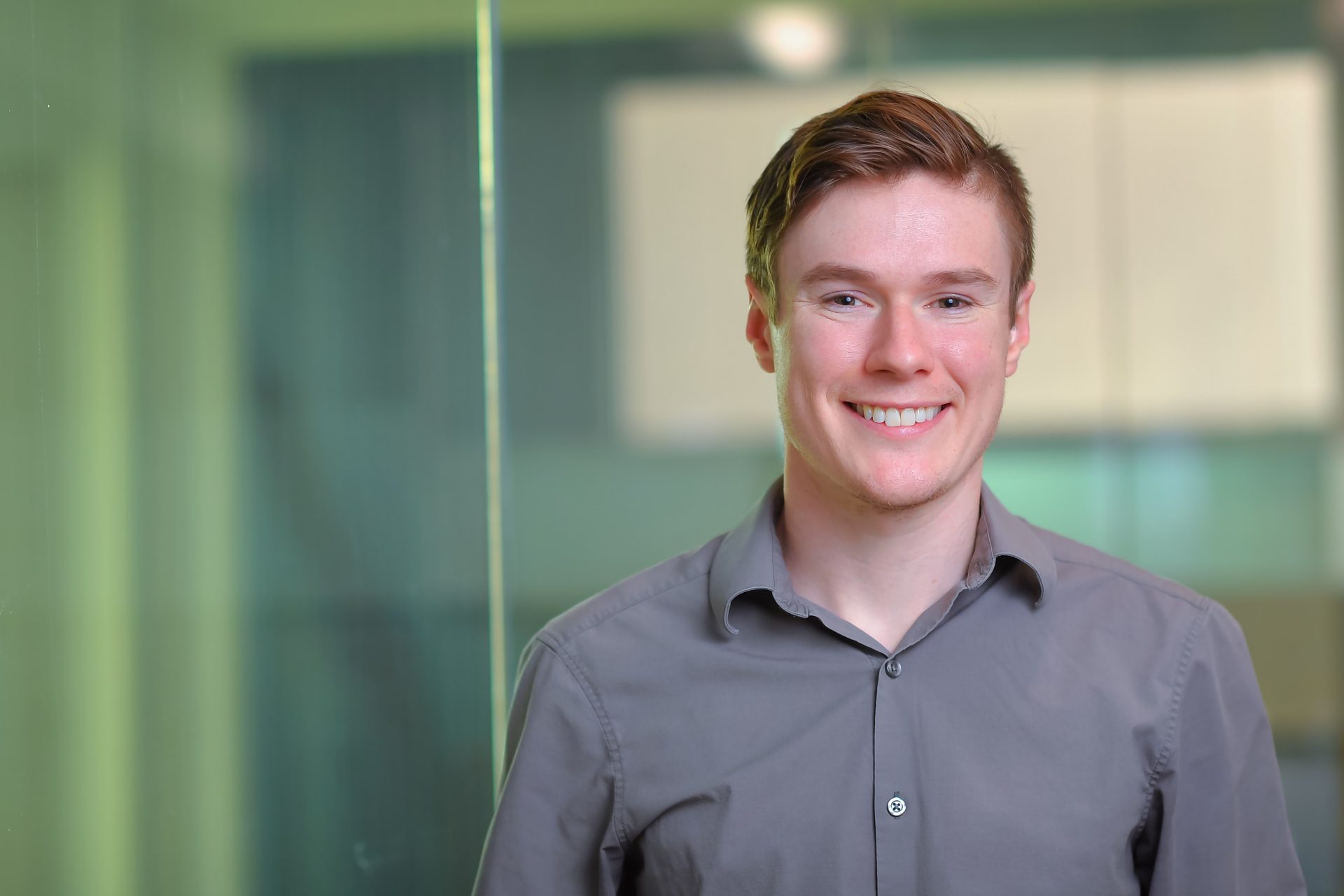
Michael Howland, the Jeffrey Cheah Career Development Professor and Assistant Professor of Civil and Environmental Engineering, is recipient of a 2026 Faculty Early Career Development (CAREER) Award from the National Science Foundation (NSF), its most prestigious honor for junior faculty members.
This award supports early-career faculty who have the potential to serve as academic role models in research and education and to lead advances in the mission of their department or organization. The five-year $575,000 CAREER grant will support Howland’s project which focuses on developing new computational tools to improve energy harvesting in stratified and turbulent boundary layers as well as the fluid dynamics of turbomachines.
“Professor Howland’s CAREER Award reflects the strength of his innovative research and his dedication to educating the next generation of engineers,” said Ali Jadbabaie, head of MIT’s Department of Civil and Environmental Engineering. “His work has the potential to strengthen energy infrastructure and advance our understanding of fluid dynamics.”
Turbomachines exchange energy between a fluid and a rotor, and are used in many applications such as marine propulsion, aircraft, and ocean energy technologies. They generate complicated turbulent flows that are difficult to analyze and can interact with turbulent flows in the atmosphere or ocean. This interaction between engineering and environmental flow physics is often overlooked in engineering analysis. Howland’s project will focus on developing new computational tools to better analyze turbomachinery flows in realistic operating environments.
This project will help improve U.S. energy infrastructure and will include a hands-on outreach component for K–12 students to learn about power generation and to inspire them to pursue careers in energy engineering.
“I’m grateful for this support from the Fluid Dynamics program of the National Science Foundation,” said Howland. “I’m excited to contribute to improving the design and operation of energy infrastructure and to inspire and train the next generation of fluid dynamicists and energy engineers. By making our models open-source and publicly available, we’re accelerating energy innovation and empowering researchers, engineers, and industry leaders with better decision-making tools.”
Howland’s research is at the intersection of fluid mechanics and energy modeling. He received an undergraduate degree from Johns Hopkins University and master’s and PhD degrees from Stanford University. He joined MIT’s Department of Civil and Environmental Engineering in 2021.
Share on Bluesky