
From flooded streets to MIT: Glen de Vera’s lifelong quest to protect global water health
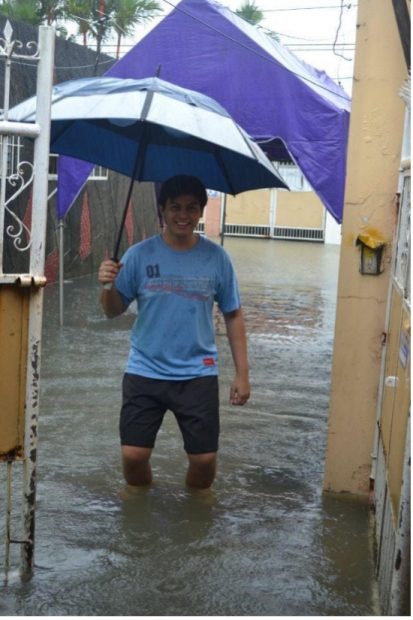
In a small town in the Philippines, environmental issues weren’t newspaper headlines, but daily realities for Research Scientist, Glen de Vera. Floodwaters routinely filled the streets. Rivers ran thick and dark with pollution. Tap water was unsafe to drink, and waterborne diseases were common.
“During heavy rains, we would evacuate to my aunt’s home and return only after the waters receded,” de Vera recalls. In his two-hour crowded bus ride to university, he would pass by the Meycauayan–Marilao River—one of the world’s most polluted waterways. Its chemical-laden smell seeped into the motorway, offering him a constant reminder of how environmental conditions affect human lives.
“Living through these challenges shaped my perspective,” says de Vera. “They taught me resilience and gave me a clear sense of purpose.” That purpose became the guiding thread that carried him from a childhood marked by environmental hardship to a career dedicated to helping protect water quality and public health.
A Foundation of Purpose and Perseverance
De Vera’s parents instilled in him the value of perseverance and education as a critical path to creating change. “We didn’t have much, so I learned early on that I had to work hard to seek and create opportunities.” This drive propelled him from a college merit award to a succession of scholarships, internships, and fellowships that allowed him to complete his master’s degree, conduct his thesis work abroad, and later pursue his PhD studies overseas.
A pivotal and deeply personal tragedy cemented de Vera’s commitment to environmental science and engineering. A few months after his college graduation, his mother passed away suddenly from a lung disease, likely influenced by poor air quality and inadequate healthcare.
“Losing her so unexpectedly, over the course of a single weekend, was a turning point,” he shares. “I committed myself to pursuing work that could make a meaningful and lasting contribution.”
Her passing strengthened his determination to improve the environmental conditions that influence health and overall wellbeing. This conviction guides his work at MIT today, where he knows that advances in treatment technologies can have ripple effects globally, influencing water quality policies in countries like the Philippines. “This perspective continually reminds me why I chose this path; to use science in ways that protect communities and make a tangible impact,” he says.
The Scientific Journey
De Vera’s initial interest in a field that was both rigorous and capable of broad societal impact led him to chemistry. He discovered an “affinity for analytical chemistry and became increasingly drawn to environmental forensics, using analytical instruments to identify and quantify pollutants.”
A resource limitation during his master’s research prompted him to seek international fellowships. This led to a transformative research internship in South Korea at the Gwangju Institute of Science and Technology, where he investigated using hexavalent ferrate to treat antibiotics in wastewater. This work was published in Environmental Science & Technology and solidified his interest in reaction kinetics and water treatment.
He then secured an Australia Awards scholarship for his PhD at the University of Queensland in Australia, expanding his focus to ozonation, advanced oxidative processes, and biofiltration to control formation of hazardous byproducts in drinking water. This research trajectory, which included a key research visit to the Swiss Federal Institute of Technology in Lausanne (EPFL) to work on ozonation of organic nitrogen with Prof. Urs von Gunten, ultimately shaped his long-term commitment to water quality and treatment science.
His quest for broader expertise led to postdoctoral research at Yale, contributing to pioneering work on single atom photocatalysts for degrading persistent contaminants like perfluorooctanoic acid (PFOA), and then to the Southern Nevada Water Authority, where he examined how oxidation influenced microbial regrowth and filter performance, connecting molecular insights to real-world utility operations.
Shaping the Next Generation at MIT
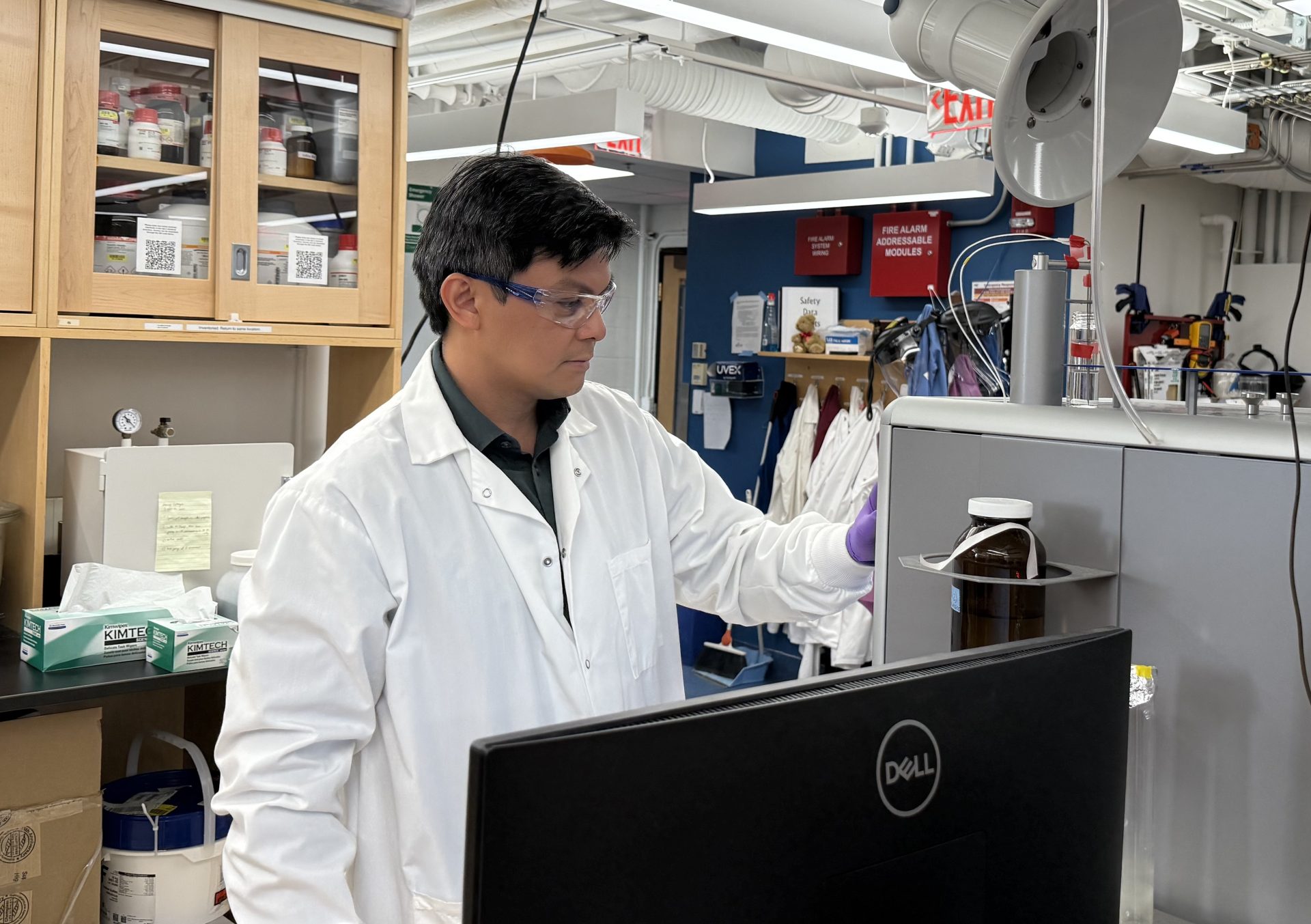
De Vera’s path led him to MIT, an opportunity he says he “never imagined possible” for someone from his background. He joined the Plata Lab in the Civil and Environmental Engineering (CEE) department as a postdoctoral associate in 2019. He worked on developing a robust liquid chromatography and mass spectrometry method that can measure ethanolamines—chemicals found in oil and gas wastewater which are challenging to analyze because of the samples’ mix of salts, organic matter, and petroleum residues that interfere with testing. The method, published in Environmental Science: Processes & Impacts, proved dependable and showed that common testing approaches without proper clean-up procedures and individual isotopic standards can produce inaccurate results and lead to misplaced regulatory actions. He also taught both the Environmental Chemistry Laboratory (1.107), as a teaching fellow and Environmental Chemistry (1.080), as a lecturer.
Today, as a Research Scientist in the Plata Lab, de Vera’s work connects fundamental chemistry with real-world impact. Working alongside the lab’s passionate graduate student team, he contributes to MIT Superfund Research on nitrosamines —potentially cancer-causing chemicals— developing advanced oxidation approaches to break down these chemicals when exposed to UV light. He also leads studies on the degradation of textile microfibers in natural waters.
Another part of his work is serving as the department’s Environment, Health, and Safety Coordinator. “You cannot do meaningful science if you don’t feel safe. Strong lab practices create the conditions that make good research possible,” he says. Lab inspections, department-wide safety town halls, and building relationships across Parsons and Pierce Labs help him strengthen a robust culture of safety.
Beyond research, teaching and mentoring are a deeply meaningful part of his role. He co-instructs the Environmental Chemistry Laboratory (1.107) with Prof. Desirée Plata, guiding students through open-ended field studies on water quality. He also previously served as Harvard’s Assistant Director for Active Learning in Environmental Engineering, teaching hands-on labs and capstone projects, and earlier taught chemistry laboratory courses at the University of the Philippines.
“I see teaching as part of a larger mission, to prepare the next generation of scientists and engineers not just to understand the world, but to improve it,” he says.
Mentorship, Music, and Meaning
De Vera attributes much of his success to the people who have inspired and supported him along his journey—from his family in the Philippines, all his mentors, to his wife and young son, whose curiosity mirrors the scientific wonder that fuels his work.
He also cites Prof. Desirée Plata as a central mentor. “Her passion for environmental sustainability is contagious, and working with a leader who inspires through both vision and example is a gift. She has always reminded me of my strengths and modeled what it means to pursue work that has meaning and impact,” he says.
Outside of the lab, de Vera reconnects with home through music. He sings in church choirs and acoustic groups, often performing in fundraising concerts to support disaster-affected communities in the Philippines. He plays basketball whenever he can. And during the pandemic, he and his wife wrote a children’s book on the scientific method inspired by their son.
A philosophy he carries closely comes from another one of his role models, marine biologist, author, and conservationist, Rachel Carson: “In nature, nothing exists alone.” A line from her book, Silent Spring continues to influence the lens through which he views the interconnectedness of human and environmental health. “I carry that beyond environmental science. It reminds me that we exist in connection, with our communities, our colleagues, and the people we meet along the way. To me, it’s a call to be open, collaborative, and supportive of one another, both in science and in life,” he says.
For students looking to follow a similar path, de Vera offers a simple but powerful piece of advice: “Stay curious, and don’t underestimate where small opportunities can lead. You don’t need to have everything figured out. Build strong fundamentals, be open to learning from different environments, and surround yourself with mentors who believe in both your potential and your purpose. Work on what you’re good at, what’s needed, and what you enjoy. And most importantly, remember that science is about service, using your skills to improve people’s lives and the world we all depend on.”
Share on Bluesky